Measure the opening first, not last
Measure the gap at the height where the gate will sit, roughly 60 to 70 cm off the floor, because skirting boards and wonky plaster make the bottom of a doorway narrower or wider than the middle. Write the number down in millimeters. Gate listings give a min and max width, and you want your opening to land comfortably inside that range, not at the very edge of it.
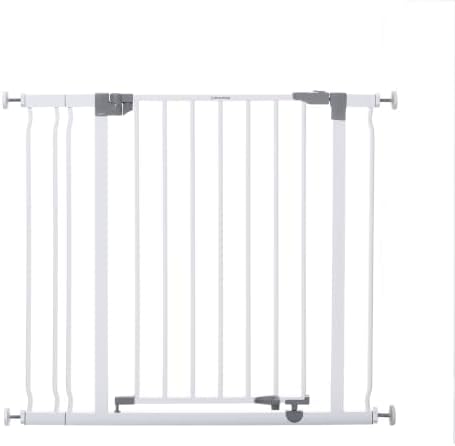
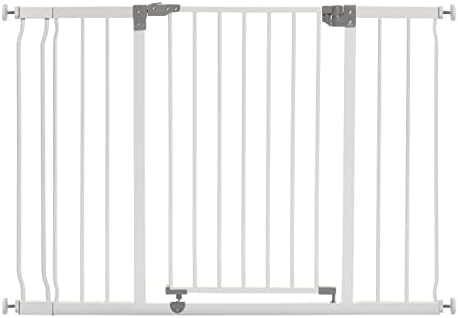
If the opening is wider than the gate, look for extensions before looking for another gate. Most of our gates accept extension panels in several sizes, and a gate plus the right extension is usually cheaper than a specialty wide gate.
Pressure or screws: the stairs decide
A pressure-mounted gate holds by pushing against the walls. That is perfect for a doorway or a hallway, because there is nothing to drill and the gate moves out with you. It is the wrong answer at the top of a staircase: friction can lose to a determined push, and up there the fall behind the gate is the whole flight.
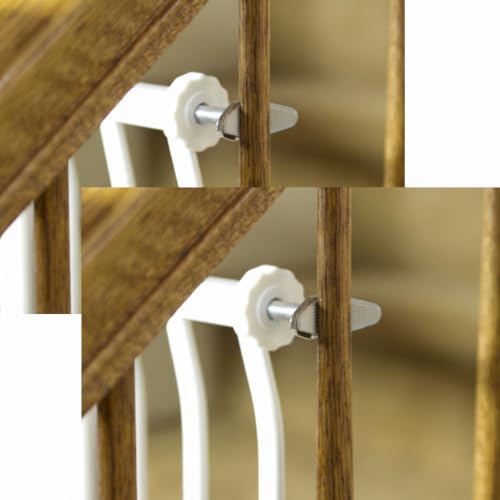
At the top of the stairs use a screw-mounted gate, full stop. It fixes into the wall or the banister posts, has no trip bar across the floor, and does not care how hard anyone leans on it. The bottom of the stairs is more forgiving, and either mount works there.
Details that matter more than color
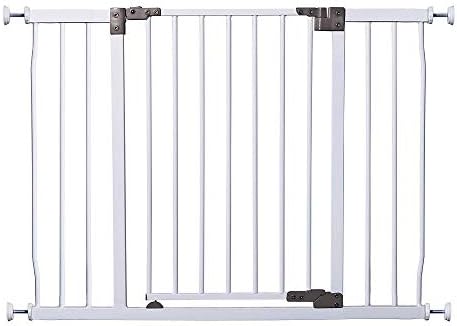
Check which way the gate swings and whether the swing can be limited, because a gate that opens over the top step is a gate installed backwards. Check the operation of the latch with one hand while your other arm pretends to hold a baby; you will be doing exactly that many times a day.
Auto-close is a feature worth paying for in high-traffic spots. The gate you forgot to latch protects nobody, and a hinge that pulls itself shut removes that mistake from the list.
After the box is open
Install with the manual, not from memory of a video. Then test the gate the way a toddler will: shake it, lean on it, rattle the latch. Repeat that test once a month, because pressure mounts loosen quietly as the house vibrates around them.
And keep the manual. The day you move the gate to a different opening you will want the torque and spacer instructions again.
Worth remembering
- Measure the opening at gate height, not at the floor; skirting boards routinely steal a centimeter or two.
- Top of the stairs takes screw-mounted gates only; pressure mounts belong in doorways.
- Extensions only carry load on a properly fixed frame, so fit the base gate correctly first.
- Retest a pressure gate monthly; they loosen without telling you.
A gate is a fit problem before it is a shopping problem. Solve the fit with a tape measure and the rest of the choice is short.